VERANDAH 3 COPIES


Verandah is a literary and visual art journal published in Melbourne, Australia. Founded as a student-run publication, the first issue launched in 1986. Originally situated beneath the shade of the vast verandah’s surrounding Victoria College, a place in which the journal takes its namesake. The publication puts emphasis on new and emerging writers and fosters creative talent and skill. It honours the work of Deakin University students, but also calls for submissions from across international writers and poets. The journal also gives out prizes according to category. The Matthew Rocca Poetry Prize was named after a dedicated student of Deakin, who unfortunately passed away during a year of study, his parent’s have fossilised his love of poetry within this prize.

2013 will mark its 28th year in print and editors are currently seeking submissions of short literature and poetry for publication later this year. Your closing date is June 1. We are honoured to extend this invitation to Metre Maid readers and look forward to reading your submissions. Submission fees are fed back into the publication at no profit to the University or volunteer staff.

For guidelines, check out www.deakin.edu.au/verandah

This years editors are Hayley Ryan-Elliot, Jonathan Lawrence, Kyah Horrocks, Lauren Hawkins and Leizl Bermejo


Hello, Dear Reader! We’re so glad you’re here.

We believe in mermaids.  None of this manatee-on-a-rock business. (Art by Chris Giles.)

We believe in mermaids. None of this manatee-on-a-rock business. (Art by Chris Giles.)

Welcome to National Poetry Month at MetreMaids.com. Throughout the month, we’ll be bringing in various perspectives on poetry from some of our favorite poets and poetry lovers. From the very beginning, one of the goals here at Metre Maids has been to make poetry fun again. To make it as accessible and exciting as it is literary and cultural. (Not that there’s anything wrong with literary and cultural, you know, but sometimes those words can seem synonymous with “dusty” and “snooty,” which we totally don’t think fit with poetry.)

With this in mind, we invite you to join us in celebrating poetry this month. Enjoy the guest posts, leave our writers some comments, and write some poetry of your own!

Love,

The Metre Maids

Kristin, Amber, Broede, Chris, Helen, Chauncy, and Sarah

Buy it from Amazon!

It’s the launch party for my teen poetry collection Dog at the End of the World in three days, and a terrible thought has struck me:

I’m going to have to mingle.

Now, I’m sure there was a point in my life where I had social skills, (mostly chatting up graduate students at English faculty events,) but I have no idea how to start a conversation with a stranger if I can’t open with “soooo, tell me about your thesis…”

At this party I’m meant to be the centre of attention: creative, witty, intelligent, engaging. I’m meant to have something to say for myself. I am in terrible trouble.

I tried googling “social skills for poets”, hoping that some helpful person had written a website dedicated to this exact topic. I’m sure I can’t be the only poet out there who doesn’t know how to function in reality. But apparently it’s too niche even for the internet. Read more…

Welcome to the second edition of Ask a Twitter Poet.  This week I was thinking about how often water comes up in my writing.  Maybe because I’m from New England, grew up on the coast, and then lived in New York city before moving to Texas where, well, we’re basically landlocked.  I dream a lot about water, too — last night I had version #34695467y of the recurring dream where my bathroom is flooding.  And so often dreams like this get incorporated into my work.

So I thought I’d ask what other folks find as recurring topics in their work.  Not abstractions like love or politics or the meaning of life, but straight up, concrete images: birds, sand, trees, breakfast cereal. Below are some of the answers I got on The Twitterz:

Read more…

Welcome to what I hope will become a regular feature here at Metre Maids.  My plan is to regularly ask Twitter a question via the @MetreMaids account (if you don’t already follow us, get on that!) and cross my fingers for some good, creative, and interesting answers.  This week I’ve been thinking a lot about my journals — the volumes and volumes of writings that I’ve kept from my teenage and college years and the volumes I have yet to write — and what a great asset they’ve been to me as a writer.  I thought I’d ask what other folks thought of as their best poetry tool.  Below are some of the answers I got on The Twitterz.

Read more…

When my freaky teenaged friends and I got too old to go on kids’ writing courses we started organising our own. At first we hired youth hostels and dragged in authors to teach us stuff, with limited success. This culminated in the year we spent an entire week watching Doctor Horrible’s sing-along blog on repeat and the lead organiser had a breakdown halfway down the stairs. No one did any writing.

We had a rethink. We decided in future we’d teach ourselves.

Surrealism

Awesome things about KWE 2012!

1. Five participants, five totally different sessions.

Self-teaching works for a few reasons: it’s cheaper than hiring someone, it means everyone is terrified of delivering their own session so they actually listen to everyone else, and as everyone knows different stuff you get LOADS of variety.

Here is this year’s selection:

(i) Surrealism and cut up poetry
(ii) Reimagining Shakespeare – as a Disney movie! or a rap song!
(iii) Fractals – putting texts through sets of rules until they become meaningless
(iv) Characterisation – creating characters based on superficial objects then imagining they are totally different people from how they appear
(v) Exploring the Cumbrian countryside and totally experiencing Wordsworth’s Romantic Sublime. Read more…

This is probably a great segue from Sarah’s piece on Exquisite Corpse, going from collaborative word vomit to then, editing and refining. In the beginning, writing is simply about itself. But it’s also about the way a poem looks at you and this is just as important as looking at a poem. Both are essentially the same deal but you need both for the poem succeed on some aesthetic level. The poem is innately a printed thing, so it serves us best when it’s looking good. If a poem were a person, it would need to be clothed, buttons done up properly and pants on the right way. Sometimes poetry comes out in a kilt and other times it comes out in a towel and sometimes it’s just not pretty. What I’m getting at, really, is that it’s important to have style, or to at least grasp style. You need to know what works and what doesn’t.  Poetry is also a lot like many other things, including eating. You need to expand your palate to know what you like and what you don’t. So read widely. Read all the things. Discover what you connect with and why and then put that into yourself, I assure you it’ll come out in your work.

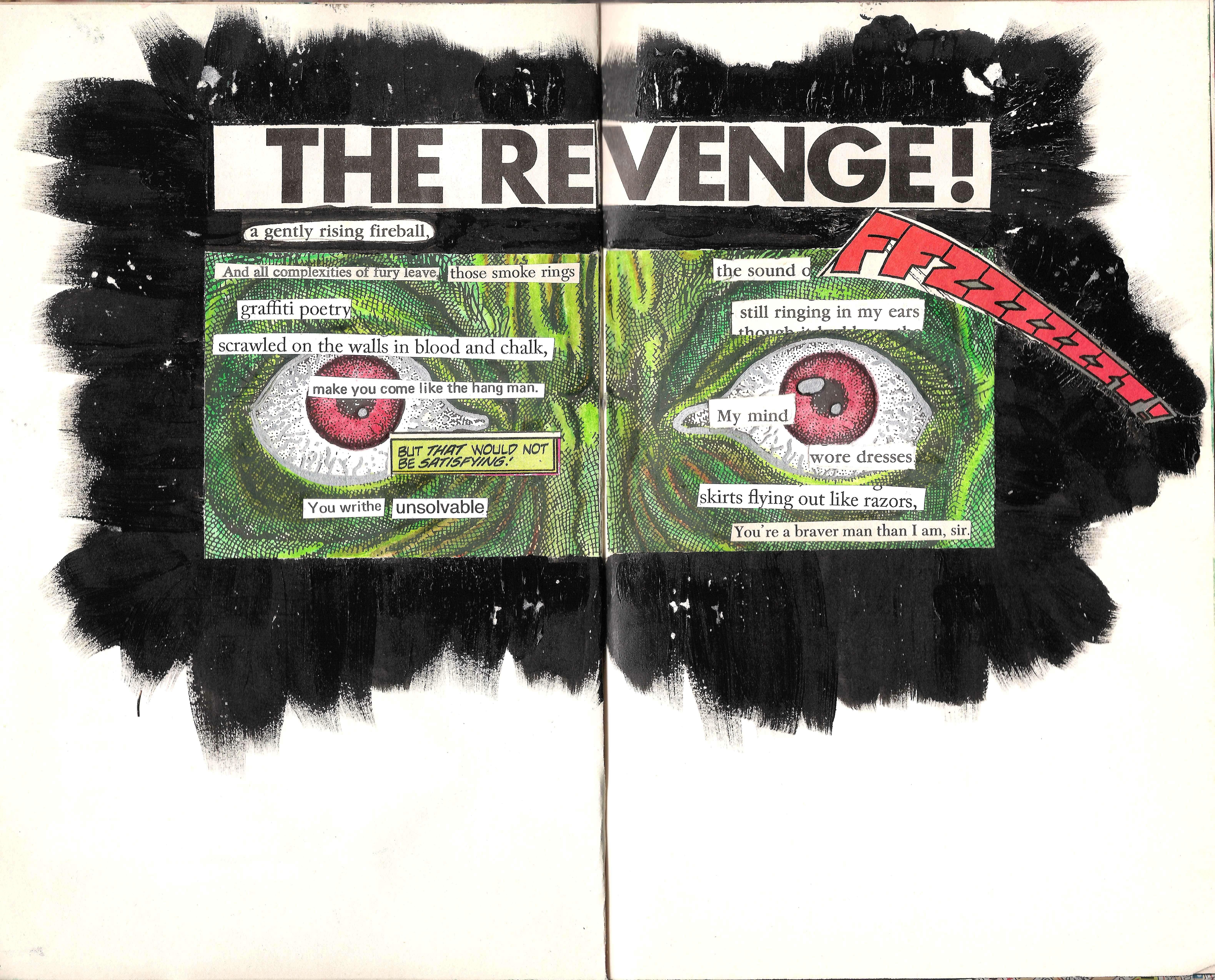
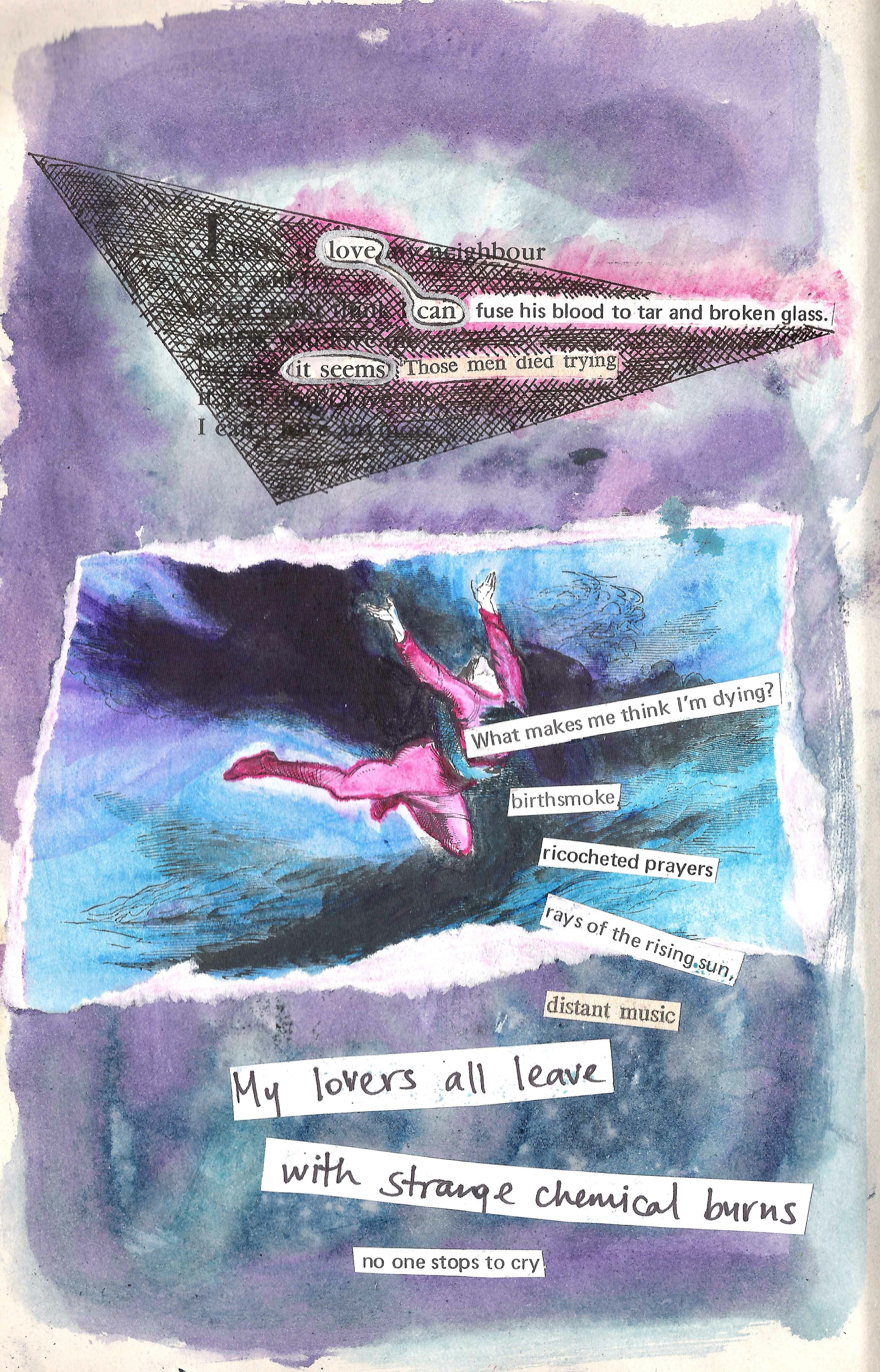
I think the pull of poetry lies in separation of stanzas; the way lines break and give more than just their intended meaning. Not only this, but the way that you can utilise a poem’s shape, space and landscape to reflect imagery. I prefer terms typography or white space, but this style is also referred to as concrete poetry. Read more…

I quested into the darkest recesses of twitter for something like verse. Now, I like twitter. But the results, friends, were disappointing….

**— 2  stars
Five retweets, twelve favourites. I don’t like the juxtaposition of ‘under’ and ‘over’, side by side. It might have been deliberate or it might have been clumsy inattention to detail, I couldn’t say. The only imagery is the ‘rip-current’. I don’t know much about the muse. I dislike any “the [concrete noun] of [abstract noun]” phrase except in comedy. 

***– 3 stars
With no retweets or favourites, this poem is much more interesting from the point of view of imagery, although I can’t imagine why there would be cotton in a smoky mouth nor  how cotton or salt relate to the original potholed street.  Read more…


I also drew whale-eating-jellyfish to keep myself sane in the dark days.

I also drew whale-eating-jellyfish to keep myself sane in the dark days.

It’s quite simple: Today is May 4th and I am on poem 28.

Assuming I write two more poems in the next few days, I will have done NaPoWriMo five times. By “done” I mean I’ll have written 30 poems, in quick succession, with no regard for their quality, around April-kind-of-time in five separate years. A NaPuritan might say this doesn’t count. They might decree I have to write exactly one poem, every day, thirty days running starting April 1st, or it isn’t NaPo. Someone a little less hardcore might say that I should, at least, wind up by April 30th. And if that floats their boat then I wish them a good voyage.

But I don’t think it matters. It would matter if, come May 1st, all the grist dropped out of my mill and I a stopped writing. It would matter if, among the wasted days of poetic incontinence, I failed to indulge in an occasional verse orgy. But I’m easygoing. And poetically libidinous. And I don’t mind dragging the affair out.

Embarrassment is part and parcel of the NaPoWriMo business. This year I indulged in love poetry and angst like I never did this as a teen. Obviously I was making up for lost time. For instance:

27/4

I don’t just want you to be here

Art by Chris Giles of My Beautiful Paintings

I want to make you be here, tie you
to a string round my wrist and drag you,
not like a puppy,
but like an angry rabbit.

20/4

If you always head east, head west,
just drive. Turn up the hi-fi
and try not to think.

You’re thinking.
Don’t think, just keep breathing and blinking,
you’re thinking, you’re thinking, don’t think.

No, don’t blush for me, I’ll own my own inadequacies.

But that’s not all! No, this year I wrote about twitterxkcddinosaur comicsGotye covers and cat videos. I wrote lovingly of the arcane Gloucestershire tradition of cheese rolling, a sport so dangerous it was banned (but has that stopped the free cheese rolling spirits of Gloucester? NEVER).

These are natives of Gloucester chasing a cheese that is rolling down a hill.

These are natives of Gloucester chasing a cheese that is rolling down a hill.

This year I sat on the carpet with my mother at 1:38am watching a storm and discussing matricide, then wrote a poem about sitting on the carpet with my mother at 1:38am watching a storm and discussing matricide. This is how it starts:

1:38am

I sat on the bedroom carpet
with my mother
discussing matricide.

It continues like this -

A mirth of matricides? she said,
a perpetuation of matricides
would that work?

A legacy of matricides, I remarked.

And concludes,

We were waiting for the lightning
to strike the church opposite,
for the cat to squeal and run for the towel basket,
for grandma to pass on.

So now you know.

(Actually I quite like that one. I guess I’m just lucky enough to have a mum who is insane.)

In all honesty I’ve written reams of total gibberish this month. But I’ve never been one to cling desperately to a dead poem in the hope that a wizard will come along with a spell to make it live. I don’t mind writing a bit of dross to get to the good stuff. Actually most of my best poems I’ve typed hurriedly in a moment of procrastination or in a lunch break, thinking they were awful. It’s only later, sometimes months later, I look back and realise they’ve got something worth redeeming. The poems I labour over always come out laboured.

I expect NaPoWriMo isn’t for everyone. I expect I am exactly the sort of person NaPoWriMo is for. The type of person who gets bored easily; who constantly wants to start the next project, and not worry about perfecting the last one; a goal-orientated workaholic; and the type of writer who only has two settings when it comes to editing, tweak and overhaul.

I will leave you with an inspired piece from day 3:

Pirates! Three of them
on the fo’castle
doing a jig:
knees up knees up
clink hi ho!
Not interested in a
whale like me.

1. Name a poem that really excites you. In that way. What’s the line that really gets you juicy?

Goodness gracious. Eighteen words into this interview and we’re already talking about my secretions.  Anyway,  the poem I’d take back to my place this week is Here Am I by Anis Mojgani, which you can read here, but shouldn’t, because you should be watching the video. (Okay, so it’s audio. But it’s my favourite recording.) Six years ago, I discovered Richard Brautigan and he totally revolutionised the way I understood poetry; six years later, Anis Mojgani is becoming that second milestone, that next will o’ the wisp on the elusive path to Everything Making Sense. Here Am I is a passionately lyric poem, but it is also profoundly vernacular, and mind-blowing to  a line-counting penny-pincher like me.  And if you want to talk about my juices, ‘lawns so perfect they looked like Clark Gable was kissing them’ is high on the list of lines that gets them flowing, but it’s when he hits ‘I wuz here motherfuckers’ in that recording that I really need to go for a liedown.

2. Who were you reading when you first started writing? Who are you reading now?

Come to think of it, I don’t remember when I first started writing. Around five or six, I suppose. My mother has poems about things like wombats and spaceships in boxes with the rest of my schoolwork, which just goes to show how little I’ve changed. I read an awful lot of Robin Klein and Enid Blyton–did you know Enid Blyton wrote a book called MR PINK-WHISTLE INTERFERES?– and I started reading Gerald Durrell and Terry Pratchett at an early age and never stopped. One of my favourite books was (and still is) THE NEVERENDING STORY, by Michael Ende. Don’t talk to me about the film, but every time I read that book I’m transported. And I love books like that. These days I read a lot of satire, magic realism and dystopian fiction, and names like Haruki Murakami, Etgar Keret, David Sedaris and Gary Shteyngart are always falling off my lips, but ultimately all I want out of a book  is to be flung headfirst into another world.

3. If your poems were machinery, what would they be made of, what would they look like, and what would they be used for?

Now this is a dirty trick you’ve played on me. A dirty, sneaky trick. You and I both know that the only thing I know about machinery is that it’s not poems. But I guess I’d say a car, not because it’s the only thing I can think of but because it can take you places. You can go on epic, life-changing journeys with it, spend days cooped up with nothing but yourself for company and come out at the end of it to something you’ve never seen before.  But it’s practical, too. It can get you to work and it can get you back again and it can get you to the shops when you’ve run out of bog roll. It can take you home to the people you love. And that’s what I want my poems to be like. And that’s why my poems would be a car. (The car would be orange.)

You couldn't make it up.

  4. Remember the last time you had one of those experiences so bizarre you “couldn’t    make it up”? What happened?

Hah! You have to remember that I live in China. China practically IS experiences so bizarre you “couldn’t make it up”. I could tell you about the taxi driver who mistook my collapsible walking stick for nunchucks, and then asked if I’d ever smuggled drugs in it; I could tell you about the boys at Chinese New Year’s running around at the traffic lights with lit firecrackers held to their butts, although I probably wouldn’t tell you about how we proceeded to emulate them at every opportunity. I could tell you how I once taught a Chinese girl the Chinese word for masturbation, or how the rules of our dormitory stipulated that we weren’t allowed to raise chickens in our rooms. But I think I’ll settle for telling you that I once organised a flashmob shoot-out in the Forbidden City with bananas for guns, spent an afternoon running around with eight other foreigners making pew-pew noises in the immediate vicinity of armed security guards, and nobody cared.

5. Take us through a few of your publication credits. Which are you proudest of?

I was first published in Soundzine Issue 4, back when I was so green that I didn’t actually realise that my work appearing in a magazine meant I’d been published.  If you’re interested in my inevitable tendency to adopt an English accent when reading poetry, that’s the link to click on. I finally started submitting seriously to literary magazines last year, with work appearing in Voiceworks, dotdotdash, and Read This Press‘ tribute chapbook to Allen Ginsberg over the course of 2011; this year I’ve had one poem in Hunger Mountain so far, and my Twitter-sized short God and Lego won third place in the Nanoism 2011 Nanofiction Contest, which was nice. I don’t know that I could choose any one that I’m most proud, since every publication is like winning a marathon run up a giant hill of icecream, but if you pressed me I guess I’d say Starry Rhymes, the tribute chapbook, just because it was so wonderful to come together with a group of total strangers and create something for the first and only time.

6. Which lit magazine do you admire above all others and why?

It’s so tempting to drop some of the big names here. I could say Rattle, which I’d kill to be published in, or Meanjin, or Gulf Coast. But I’m going to wave a feeble flag for the home team and say dotdotdash, partly because they run a fantastic international magazine out of the most isolated capital city in the world, partly because they give out the sort of rejection letters that would make Jesus weep into his hankie and swear to try harder next time, and partly because their website is covered in ducks. And they do such exciting things! Their tenth issue, Fingerprint, asks writers to submit not individual pieces but a small zine, with readers receiving not a magazine in the traditional sense but a random selection of  submitted zines. A unique experience with every purchase. You have to love a magazine with the guts to try something like that.

7.  What is the worst piece of writing advice you have ever heard?

‘Have you considered taking all of the punctuation out of it?’

University poetry workshop, 2011. I am now self-taught.

8. The vampire apocalypse is upon us and only poetry can save us. But how?

Well, I figure vampires are as aware of recent literary trends as we are. They read books, they’re not dumb. And by all accounts, they’re pretty egotistic buggers, so I figure they can’t be any more thrilled to find themselves depicted as sparkling pansies than we were to have to read it. Or see it at the movies. Or shove our fingers in our ears and go ‘la la la’ while the great rank tide rolled on. So here’s my plan: everyone starts writing amazing vampire poetry. Beautiful stuff, eloquent, evoking every aspect of a vampire’s essential badassery in exquisite verse. We get them hooked on it, keep them hungry not for necks but for nouns, and our problems are solved. The diversity of poetic themes might suffer, but at least we won’t.

9. What do you have planned for next few months? Publications, projects?

I don’t know. Honestly, it keeps changing! I have a poem forthcoming in Vintage PressGeek Mook and four more forthcoming in Hunger Mountain. I also have a total of twenty-nine poems and short stories out to various markets at the moment, so I should be receiving some exciting rejection letters in the near future. I’m contributing regularly to Bird’s Nest: Ai Weiwei in English, which is a fantastic project bringing one of China’s most influential contemporary artists closer to the English-speaking world, and I’m slowly getting involved both with Paper Republic, a group of literary translators based in Beijing, and Pathlight magazine, which publishes English-language translations of Chinese literature. So I guess I do have a lot planned after all. I may even squeeze in some writing.

Art by Chris Giles of My Beautiful Paintings.

10. What is your favourite conspiracy theory and why?

It’s a difficult choice, but I’m going to have to plump for David Icke and his reptilian agenda. Obama is a shapeshifting alien. The Royal Family are shapeshifting aliens. I don’t know if Icke has ever claimed that Shakespeare was a shapeshifting alien, but I certainly wouldn’t put it past him. And of course, all of these evil extra-dimensional reptiles are secretly controlling the world. I mean, obviously. (If you can click that link and not die of laughter, I tip my top hat to you. Of course, that could be part of their dastardly plan. Only time will tell.)