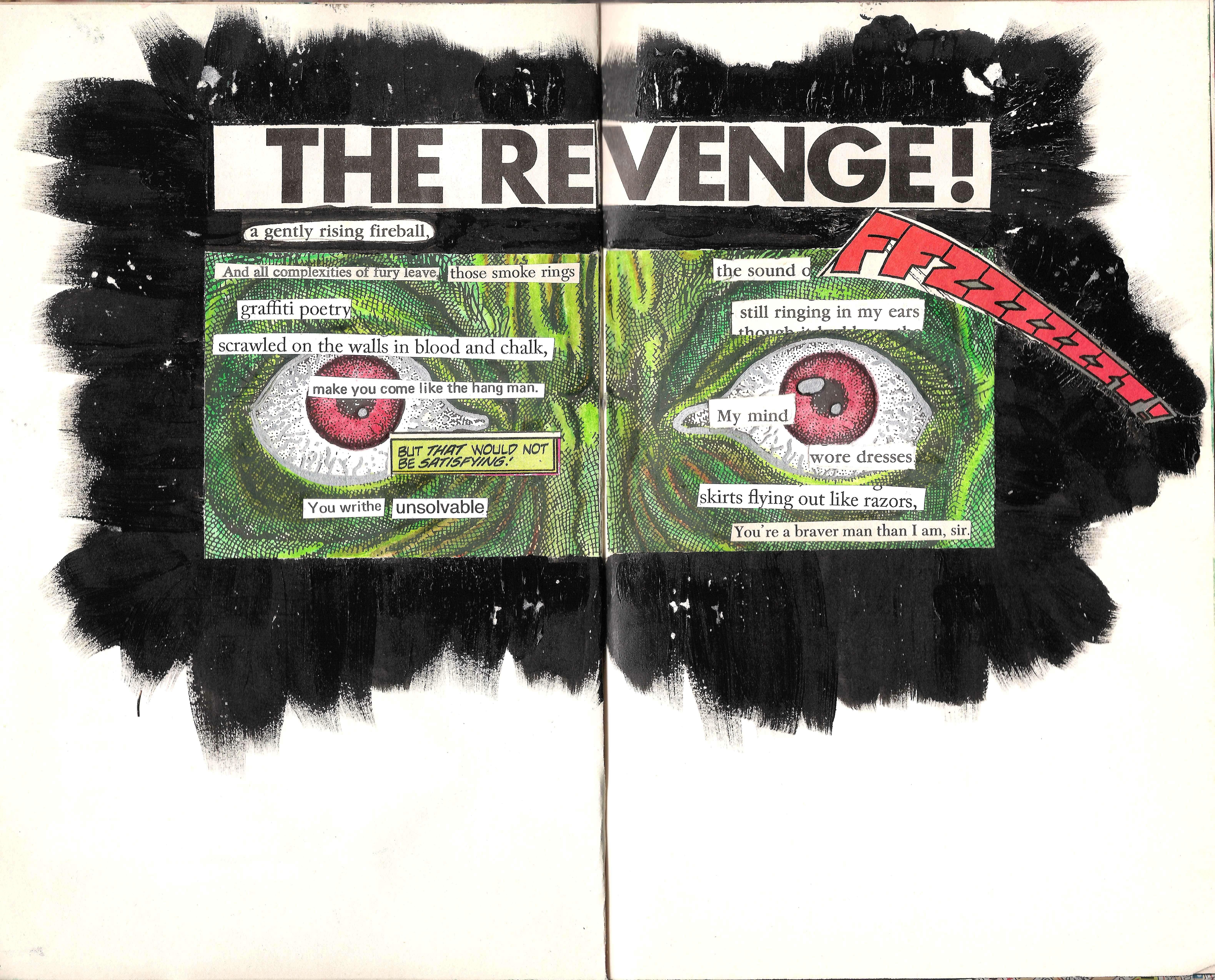
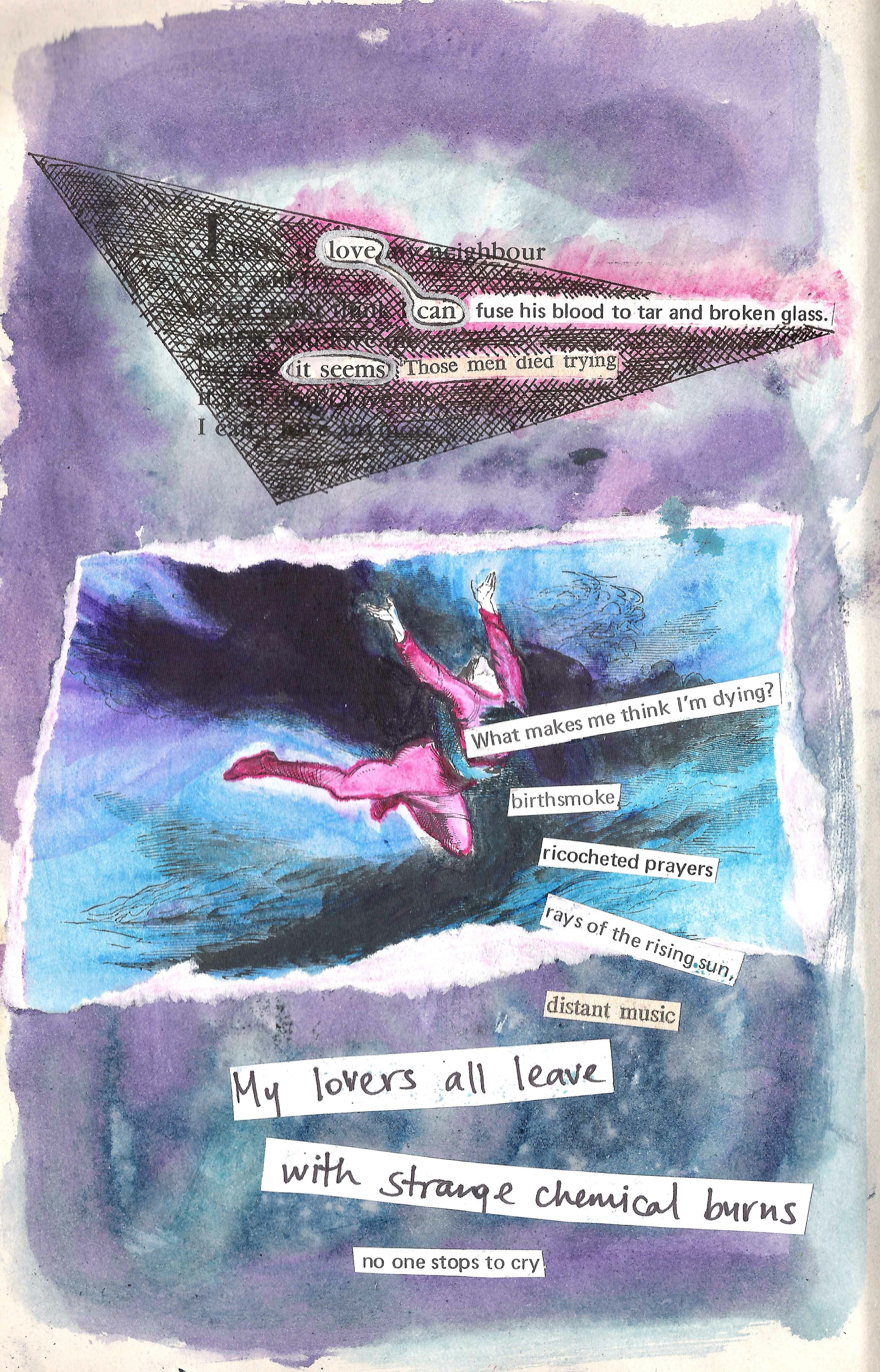
Sherry O’Keefe presents us with 4 vignettes which teach us how to launder our own imagery. This post reminds us constantly to look around ourselves, even the smallest of happenings are ones which can be spun into a poem or a story. Everything has a story. Everybody is their own storyteller.


Sugar On a Rope:

He told me potatoes were complicated. I know this is true because I wrote it on a scrap of paper and saved it in my back pocket. Some conversations later, I retrieved the scrap of paper from the lint trap in my dryer. Apparently I had laundered the words when I washed my jeans. The scrap of paper looked a bit like a former leaf, except I could see these words in faded ink: potatoes are complicated and some poems are born in badness. The trouble is I cannot remember the conversation that produced these quotes. I don’t remember anymore where these words came from.

I don’t always know what to keep and what to let go. I’m not the sort to let anything go. There are scraps of paper all over my house. For example, these are the words next to my kitchen sink: We don’t even need to talk about houses on the hill. As writers we deal with the hanging on and the not knowing when to let go.

When he talks to me, he uses panoramic strokes, coaxing me to see the big picture. And for a bit of time, I am right there with him, seeing the big picture. And in fact, I am enjoying the wide view his words offer . . . but then something happens as we keep talking. It is as though we go around a bend, chattering and laughing.

But the poetry-gene activates and the next thing I know I am on my knees, examining something minute, something telescopic.

Later, I will find more random words on scraps of paper:

sugar on a rope, failed harbor

What does it mean to want to be heard?

Little men lined up like starfish on the edge of a tidal pool

Did anything happen in 1882?

Some of these words will find homes in my poems. Some of these words will end as lint in my dryer. And (I am sorry to admit) I am not likely to remember the walk along the river, the wide blue sky, the way back to my car. I won’t remember taking these photos.

*

wheat2

When Someone Picks You Wheat:  

Comes a time we have known before, when we feel a bit out of sorts. Maybe the rain gutters on your house are threatening to rip off your eaves? Probably you are reluctant to climb the ladder and address the problem? Maybe you are feeling like Cali’s new black tire (what happened to the pink one?!) lost between the storm and the front door and no one has noticed you are missing? It may be I am not speaking about gutters and eaves, doors and tires. In an antique aqua blue vase next to my bed is a bouquet of wheat stalks. A few years ago someone read a short story I had written about wheat fields. And then a few went for a drive along the Hi-Line, thinking to take a photo of the crop and send me the photo. Others thought to stop and pick some stalks. Someone parted with a favorite vase. When I realize I am feeling invisible, or under-powered and not willing to climb ladders to save my eaves, the wheat stalks cheer me on. And when I say wheat stalks, I mean to say wheat pickers.


Trailing
First published by Free Fall Magazine in Calgary, Alberta.

He told me once that wheat was patient. If I needed
help with waiting, I should come to this farm field. Between

these stalks of sway and pause, and the horizoned Little Belts,
white pelicans flash and fish the river breaks. I trail the red rock

bank on Jeep, a buckskin mare. We climb dried-up gulches, thread
through bursts of orange paintbrush and bitterroot blooms

of baby-girl-pink. The sky is lonely when it is solid blue- this is why
it follows you. He called it the tag-along shadow. Two strips

of jerky, half of a water canteen. Three ravines to the backside
of Crow Pond. Jeep chomps along the edges of the field, I slip

the red blanket from her sweaty back. The west wind hushes shhhh,
think softly. Gray green yucca, white cottoned milk pods tickle

my bare legs. The more earth touches you when you are young,
the stronger you stand when you are ancient. I circle the rings of teepee

rock, spread the blanket down. Many palms have smoothed
this woven fabric. Jeep swishes her tail once. She’s not my horse-

this is not my dream. He told me once he knew where ghosts come
from. I take in his breath when he exhales. He’s been here forever.

*

signs

 Trespass 

One year my Christmas tree stayed in its stand until March before I hauled it outside to the curb. Twisted girl that I am, there are fluctuating moments in my life when I recall that year fondly. Maybe what I mean is painfully. That year I thought life had trespassed me. My brother talked me through those times. Told me when we learn everything we need, fits inside one Wal-Mart bag, then we’ve learned a liberating lesson. And now, some years later, we re-talked this in the cab of his 1960 Dodge.  Brother, daughter, dog and me. This is the brother who is good at restoring things. Once this pickup gets back to what it was originally meant to be, he will start on something else.

We were on our way to walking his latest dog along the river. This one had been rescued hours shy of being put down at the shelter. Eight months of constant care, she was a new and different dog. How far could I walk, he asked.  Five miles? Eight? He had things to show us. He stood along the river bank, pointing downstream. From here to there and back?

Yes. Sometimes the best path means losing sight of the river for awhile, a bit of trespass might be involved, he said.

Slow talk, long walk –we watched his dog chase gophers. This is the brother with some of the best story-telling ways. It’s all about pacing with a few teasing touches, he explained to my daughter. The longer we walked, the more she grinned – she knew where we were going. No matter which part of my family we spend time with when we visit Back Home, she’s discovered we end up way, way downstream looking down and across the water to where we (not she) grew up.

signsstartWe aren’t allowed access to the other side anymore. The power camp is gone, but if you squint just right you can see the water fountain and the apple orchard and the birch tree we used as second base. The first canyon where we ice-skated on the ponds, and the second hill where we flew kites. People from town drive out to this point, sit in their cars and take in the sight. Unless they get out of their cars and step across the barrier fencing they miss what the river is about. One hundred yards beyond the no-trespass sign is when you start to feel the power of water falling.


*


Don’t look directly at the shadow:

A day after Robb arrived for her annual visit, they piled into Dad’s pickup – Mom in the middle with my dad driving and Robb to my mother’s right. In the back, no doubt, was Roadey, my mother’s one-hundred-pound dog and a cooler with water and juices, carrot and celery sticks. Maybe even some of my mother’s cupcakes. Road trips without Mom’s food in a cooler haven’t happened yet.

Robb has made the annual Trip Back To Montana for at last fifty years. She is my mother’s best friend. By now, this threesome must have driven every back road and seen all there is to see Out Here. For those of you who have been reading this blog for a few months, you may have noticed how many times my dad’s landscape photos have shown up in here. He never tires of our vast landscape nor of  taking photos of the same plateaus, buttes, rock formations and faint wagon trails he visits on these drives.

shadowsThis trip, however, Robb asked my dad to stop in the middle of the gravel road. Take a picture of the praying hands she suggested in her back-easternly way. At first Dad couldn’t see what she was referring to-on account of the shadows along the ridge. Then he realized because of the shadows, the praying hands were possible to be seen.

At 12:51 A. M. this morning my BlackBerry buzzed on my nightstand. I rolled over in bed, knowing I had a new message from my dad (he doesn’t sleep at night). He had sent me the above photo and a quick note about what he’d learned. When we let shadows do what they do best, we see what they suggest.

What I like best about good poetry are the shadows between the words. Often the poem that vibrates inside me is the one which only suggests what might be revealed. I live for the gradual realization we experience when we let shadows work their tricks on us.


profile 2

Sherry O’Keefe, a descendant of Montana pioneers, grew up in a power camp on the Missouri River. Residing now near the Yellowstone River, she is a poetry editor for IthacaLit and an assistant editor for Fifth Wednesday Journal. Her work can be found in Camas: The Nature of the West, Terrain.org, Art & Document  and many other journals. Her most recent collection of poetry, Cracking Geodes Open, was released by Aldrich Press in 2012. Visit her: http://toomuchaugust.wordpress.com.

51R8NVYPFZL._SL500_AA300_

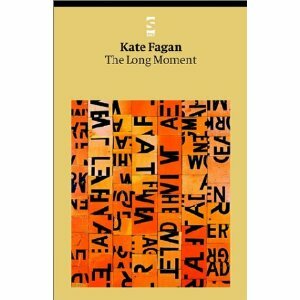
Kate Fagan – The Long Moment
Salt Publishing
$19.95

Kate Fagan is an exceptional Australian poet and musician whose collection, The Long Moment, was published in 2002. Her latest offering is First Light (Giramondo Press) published last year. Her work has appeared in Meanjin, Salt and Calyx: 30 Contemporary Australian Poets. Fagan’s previous works are the chapbooks Thought’s Kilometre (Vagabond Press) and return to a new physics (Tolling Elves). This is a slim and beautiful collection spanning 105 pages, and a work that revisits the former collection.

Think science, music, geology, biology and mathematics. Fagan’s poetic ear is finely tuned and her poems are polished and each is a humble image. Reflect on how these small moments expand outwards and approach complex themes. The first section Calendar starts at April and continues on with 9 prose poems which expands on the idea of organisation on a monthly basis, becoming somewhat of a diary. My favourite lines are from (august) with ‘Emptying over a balcony, slow light recalls the loss of a city.’ There’s something that’s both simplistic about the nature, but also knowing in its grief. Grief, too, is a slow process of gathering oneself. Read more…

1-8e10fa5ef2

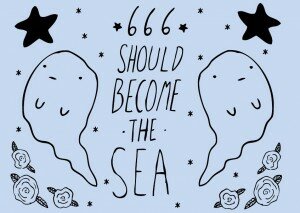
Illustration Cover by Hannah FantanAt first glance this collection reminds me of the way MTC CRONIN accounts for each image, the way one might do so with a list, or taking stock of an item. It’s kind of what I love about CRONIN and what impresses me about Christmass’ poetry. The poetry even utilises space beautifully, echoing precisely the metronome pattern of the sea. At the same time this space is precarious within its typography.

At the beginning of this self-published collection released from Scribd. The site is essentially a huge shared library where you can upload original and innovative works, accessible online or on your smart phone. There’s a keen consistency of rhythm and this undercurrent carries each line as an individual, which is very much what the players of this collection rely on. The narrative can be interpreted on different levels or perhaps an intended gathering of all aspects. The title and the way the poem expresses itself makes me think perhaps a homage to Kerouac’s, The Sea Is My Brother.

Some images that caught my eye which I loved were:

a tempest of albatross
and death
a globe beneath
surface of brine

The thing I soon realised is that 666 SHOULD BE THE SEA doesn’t let you up for air, it keeps you under like a careful and practised anesthetist  It doesn’t even give it’s subjects—the crab or the swordfish—pause or mercy. The ocean swallows everything.

666, the enigma of numerical evil represents unknowns. The sea overtakes the highway and Christmass does well in this transition of the sea (the natural) to apocalyptic (the unknown). There’s no sense of panic in this shift, the directions are soft and kind ‘Let the sea in’ almost like a chant. As readers and witnesses we become the sea and the poem proclaims ‘Become the sea, and so become idealess’. Drawing imagery from lines and curves, ‘hooks’, ‘nets’ and put up against an altered nature: ‘symmetrical fish’. The poem tells us to try not to drown, when the odds are against us.

The great thing about this collection is that you can read the first column straight down its margin or you can read across the line. This gives us a two for one kind of bonus and is an exceptional feat in terms of how difficult that kind of thing is to pull.

This poem is mad. It gets mad with the way its been such a glutton: ‘the swell, the hairy-tailed current of the towering / ocean drift’. Read more…

burning rice by Eileen Chong | Australian Poetry 2012
This post first appeared on Virgule.

burning rice is part of the 2012 New Voices series and the debut collection from Eileen Chong. The publication is a sleek, pocket-size 40 pages. Here lies great poetry, tight phrasing and an innate way of telling stories. The title evokes a nostalgic sense of home and food; the notion of absence circulates the poems, reminiscent of scents and fragrances. What strikes me first is Chong’s ability to immerse the reader in two landscapes: the old and the present and this imagery is unswerving, charming and utterly absorbing. Think the sacredness of bathhouses, mooncakes and photo albums braided with beautiful descriptions of quiet and reflected moments. In any other context, these glimpses could have been mundane but here they’re given breath.

The poetry feels like walking through a family home, all those details, ornaments with stories behind them. There’s a familiarity in reading these poems, despite the cultural difference. In ‘Before Dawn’, Chong textually dedicates the poem to her grandfather with wonderful use of language, shifting to present from passing: ‘Father of my father, I was not quite seven / when you died. We drove in darkness / before dawn broke’. In ‘My Hakka Grandmother’ there’s the lines ‘run / through the fields, feet unbound /’ and ‘rice husks, like your dark hair’ evocative of childhood and that memory of food and love combined. This poem describes well the borders of otherness, specifically in ‘I wonder where our bloodline begins. / We are guest people /’. In ‘Kelong’ Chong reminiscences 1980 via the use of photography, the imagery is haunting in ‘He holds the ghost / of a fishing line but has caught nothing’ and ‘my grandmother steams / the orange fish in a wok, when you grandfather picks out / its eyes with his chopsticks’. Like Chong, I can also taste ‘the sweet flesh’ and the poem conjures up a cinematic photograph that I hold in my mind. Read more…

Amy May Nunn

Amy May Nunn

I wanted to be an explorer. For a long time I had a clear plan, that I would become an Archeologist, escape my family and their art. I would discover tombs and not art. Ocean divers and tomb raiders, these were my people. Growing up I would disappear into the English countryside for hours at a time, eventually developing a ‘Famous Five’ complex, dressing androgynously and insisting that everybody call me George for the better part of two years.  I even convinced myself at one time that the pond opposite our house opened up into the Mississippi and made a raft to float away on, which promptly broke apart and left me with pneumonia. My aspirations of becoming an Archeologist were eventually quieted as I got older (and realised it had very little to do with Indiana Jones), and having been born into a family of artists with sometimes painfully open minds when it comes to my misadventures, romantic, poetic or otherwise, I was robbed of any controversy that growing into a bisexual poet customarily brings.  I feel like becoming a writer was the perfect consolation. It allowed me an entirely new sense of adventure and discovery, one that I could access any time I wanted.

The tiny ghost of an archeologist in me was brought back to life last year though, at a wedding in Dorset where I stumbled across the idea for my current project. I stayed in a small town named Lyme Regis, situated on the Jurassic Coast, and quickly learned this sea worn, crooked little place is renowned for it’s fossil laden cliffs. I began to notice the name ‘Mary Anning’ cropping up in the various fossil shops, on plaques and signposts. It turns out she was a local fossil hunter and paleontologist in the 1800’s, and made some of the most significant discoveries of the 19th century, including dinosaurs such as the first plesiosaur and ichthyosaur. She immediately captured my imagination, and researching her became a new and bizarre obsession. Read more…


I also drew whale-eating-jellyfish to keep myself sane in the dark days.

I also drew whale-eating-jellyfish to keep myself sane in the dark days.

It’s quite simple: Today is May 4th and I am on poem 28.

Assuming I write two more poems in the next few days, I will have done NaPoWriMo five times. By “done” I mean I’ll have written 30 poems, in quick succession, with no regard for their quality, around April-kind-of-time in five separate years. A NaPuritan might say this doesn’t count. They might decree I have to write exactly one poem, every day, thirty days running starting April 1st, or it isn’t NaPo. Someone a little less hardcore might say that I should, at least, wind up by April 30th. And if that floats their boat then I wish them a good voyage.

But I don’t think it matters. It would matter if, come May 1st, all the grist dropped out of my mill and I a stopped writing. It would matter if, among the wasted days of poetic incontinence, I failed to indulge in an occasional verse orgy. But I’m easygoing. And poetically libidinous. And I don’t mind dragging the affair out.

Embarrassment is part and parcel of the NaPoWriMo business. This year I indulged in love poetry and angst like I never did this as a teen. Obviously I was making up for lost time. For instance:

27/4

I don’t just want you to be here

Art by Chris Giles of My Beautiful Paintings

I want to make you be here, tie you
to a string round my wrist and drag you,
not like a puppy,
but like an angry rabbit.

20/4

If you always head east, head west,
just drive. Turn up the hi-fi
and try not to think.

You’re thinking.
Don’t think, just keep breathing and blinking,
you’re thinking, you’re thinking, don’t think.

No, don’t blush for me, I’ll own my own inadequacies.

But that’s not all! No, this year I wrote about twitterxkcddinosaur comicsGotye covers and cat videos. I wrote lovingly of the arcane Gloucestershire tradition of cheese rolling, a sport so dangerous it was banned (but has that stopped the free cheese rolling spirits of Gloucester? NEVER).

These are natives of Gloucester chasing a cheese that is rolling down a hill.

These are natives of Gloucester chasing a cheese that is rolling down a hill.

This year I sat on the carpet with my mother at 1:38am watching a storm and discussing matricide, then wrote a poem about sitting on the carpet with my mother at 1:38am watching a storm and discussing matricide. This is how it starts:

1:38am

I sat on the bedroom carpet
with my mother
discussing matricide.

It continues like this -

A mirth of matricides? she said,
a perpetuation of matricides
would that work?

A legacy of matricides, I remarked.

And concludes,

We were waiting for the lightning
to strike the church opposite,
for the cat to squeal and run for the towel basket,
for grandma to pass on.

So now you know.

(Actually I quite like that one. I guess I’m just lucky enough to have a mum who is insane.)

In all honesty I’ve written reams of total gibberish this month. But I’ve never been one to cling desperately to a dead poem in the hope that a wizard will come along with a spell to make it live. I don’t mind writing a bit of dross to get to the good stuff. Actually most of my best poems I’ve typed hurriedly in a moment of procrastination or in a lunch break, thinking they were awful. It’s only later, sometimes months later, I look back and realise they’ve got something worth redeeming. The poems I labour over always come out laboured.

I expect NaPoWriMo isn’t for everyone. I expect I am exactly the sort of person NaPoWriMo is for. The type of person who gets bored easily; who constantly wants to start the next project, and not worry about perfecting the last one; a goal-orientated workaholic; and the type of writer who only has two settings when it comes to editing, tweak and overhaul.

I will leave you with an inspired piece from day 3:

Pirates! Three of them
on the fo’castle
doing a jig:
knees up knees up
clink hi ho!
Not interested in a
whale like me.

So back when we started this blog, we were filling out our bios, and under influences I listed Chris Carter — creator of one of my favorite TV shows, The X Files.  Sarah messaged me and said “oh, wait, I thought we were just filling in our influences as poets.” And I was like “Um, yeah.  Chris Carter is totally one of my poetic influences.”  Sarah and I have long had a relationship in which almost nothing we say to each other is all that weird — at least to us — so we continued with putting together the blog and haven’t spoken of it since.

Illustration by Chris Giles.

Until today.  I want to talk about my X Files poetry.

First, I want to get this out of the way: TV is a brain-rotting time-suck of the modern world and no good things can possibly come from a 90′s show about aliens and poltergeists and sewer monsters.   Look, y’all — a story is a story, writing is writing, and inspiration is inspiration.  I really don’t care what form it takes.  There’s good TV and bad TV, good books and bad books.  I have no shame in finding inspiration in the stories written for television and film.  Among other influences I count Buffy the Vampire Slayer, Scrubs, John Hughes’ body of work and this teen movie from when I was in high school called Can’t Hardly Wait.

Art by Chris Giles.

I think what makes the shows I love so brilliant and so inspiring is how, whether comedic or tragic, realistic or speculative, they get the nature of humanity.  The dialogue in Buffy is snappy, Scrubs knows how to take a big, epic theme and smoosh it into a 30-minute episode while following multiple plot threads AND J.D.’s dream sequences, and for as much as I’ve rolled my eyes at some of those oh-so-Chris-Carter monologues delivered at the beginnings of of all of the Very Serious Episodes of The X-Files, damn they’re poetic.  And I think that’s when I got it — that there is beauty in science, science fiction, and back around again to science.  That the way we connect to the weird and wonderful and wondrous is something worth writing about.  And I wanted to write about it myself.  I needed to make poems about the Sasquatch and el chupacabra.  So I did.  I wrote those poems.  I wrote a novel about the Jersey Devil.  And I researched Christopher Columbus and the Bermuda Triangle and wrote that poem, too.

Art by Chris Giles.

Recently I’ve started collecting my paranormal pieces for a chapbook I’m working on.  Ghost hunters, UFOlogists, lake monsters, teenage necromancers and urban legends.  I think I learned how to write about these things with tact from Chris Carter.  It’s a place where fantasy and reality meet and while I consider myself a skeptic, well, like Mulder and Scully, I want to believe.  I want to tell the stories about maybe and could be.  And poems are story distilled down to the hardest bits — which is one thing I love about writing poetry.  X Files poetry, then, is these what ifs in their hardest bits, with me doing my best to make it lyrical and beautiful.  I wish I could say it was hard — but I love it too much.  A challenge, though.  I’ll say it’s that.

I have maybe 15 or so pieces for my would-be chapbook.  I have no idea if it will ever see the light of day.  But on my hard drive, it’s fun to look at, to read aloud, to speculate upon.  Below is an excerpt, my poem “The Leeds Baby.” Meanwhile, readers, do you have any unexpected influences for your work?  Please feel free to list them below! And, you know, ask Chris Giles to illustrate them on his tumblr.

“The Leeds Baby”

I couldn’t keep the child – the nurse said as much
as the doctor pulled its body from inside me.

Of course I’d whispered curses on these lips.  But this is quotidian
in the cold North East, standing mere moments from witchery.

The child, though – shouldn’t he be innocent?  Even when Hell
has molded bones into wings,  stretched the eyes red,
hunched the body’s back into a desperate “U.”

I loathed the thing, and yet, as Mother, I sent the nurse away,
clutched my baby, nursed him. Here is humanity, I thought.

Nights, I watch him sneak out his window at the side of the house.
Look, I think, God’s little gift is off to play in the woods.

He believes me ignorant. But mothers have a sixth sense
when it comes to wayward sons.

– E. Kristin Anderson, 2012.