When I was a student in a Master’s program, I found I’d been accepted into a prestigious program for fiction and had also gotten a fellowship at another brand new program in poetry. I went to my professors, begging for advice. It seemed to me the first time in my life I faced such a big decision and actually had multiple good options, rather than a series of lesser evils. I went to my major poetry professor and asked him what I should do and he said, “You should be the first person to turn down the Prestigious Program,” and he did make that sound appealing. I went to my major fiction professor and he said, “The question is really simple: Do you ever want to make money from your writing?” His implication was clear: everyone knows poets don’t make money. But then, literary fiction writers (with those rare and bewildering exceptions) rarely make all that much either.

I’d like to say that at that moment I thought of the donor of a small prize I’d won earlier. She was a little old lady who wished to remain anonymous but the faculty made sure I got to meet her. She told me about how she’d met Robert Frost when she was an undergraduate, that she had picked him up at the airport for a reading at the school, and how kind and gracious he had been to her. That was one of her main reasons for funding the award. I was very grateful to her (and to Robert Frost for being so civil, so unlike the more common model for poets). The prize allowed me to buy a printer and some books, all of which I still have and rely upon.

But I didn’t think of that. I based my decision largely upon the fact that the Prestigious Program wouldn’t allow me to take poetry workshops while I was there but the new program was happy to let me continue working in both. Now I think about that moment pretty often, particularly when I think about how poets and poetry can survive in a market economy.

One of my good friends confessed me to recently that until she’d met me she thought poetry was dead (not that I’m convincing evidence for liveliness, but I refer from time to time to a culture of poetry). This neighbor is a reader, and a reader of literary books, so her assessment made me feel glum. Of course the body of poetry has been pronounced dead many times by many different people, but eventually belief can cause a thing to be true, can’t it?

I just finished reading The Gift by Lewis Hyde, a book originally published over thirty years ago. In it, Hyde talks about the importance of gift economies—how a gift circulates and is meant to keep circulating in a group, and how artists fit into the gift economy (we think of artists as “gifted” and in turn when their work survives, attains the stature of real (vs. commercial) art, it seems like a gift; in other words, it begins to seem like something that would be nearly impossible to consider as a simple commodity). But the trouble is, of course, that we don’t live in a gift economy—that we must pay for housing and food and health care and clothes—and so if we spend our time creating “gifts,” how are we to survive?

Right now it seems that there are four answers to this question and that most poets use one or all three to make ends (more or less) meet:

  1. Teach. Academia offers regular pay and usually health care. The problem is that the really good jobs, the ones with manageable course loads and are located in places you would truly enjoy living, are rare and becoming more so. I can only speak to the situation in America, but here it is getting more grim by the day. Cuts have been made to higher education in every state save two and the emphasis has switched from education (read “critical thinking”) to instruction (read “skills industry is seeking”). Poetry has long been an uneasy guest in the classroom, and perhaps escaping from it will have some beneficial effects in the long term. In the short term, desperate poets grow more desperate.
  2. Win awards. There are a number of them available, but never enough to go around, of course. In The Gift, Hyde talks about Ezra Pound, an odious man but important poet, and how the only money he made from poetry was a pittance in royalties and a prize of $2000. It’s hard not to think of how unfair this system is—that a poet becomes valued after death and that so many poems were not written because poets were so busy pulling ends as hard as they could.
  3. Make money from your books. Okay, stop laughing.
  4. Work an unrelated job or two and write in your “spare time.”


I think we should try to save our educational system (for reasons mostly unrelated to poetry) and to fund it as vigorously as we can. I also believe in awards, from the government, foundations, and philanthropists. These awards offer not only material support, but an affirmation of the work that can keep the poet working (and giving). I also believe that working a job outside of the field of poetry can be wonderful—and for many people it makes a lot of sense.

But all of this looks at the question from perhaps the wrong way round: after all, the question isn’t really how should poets be paid, but rather how we should pay for poetry. And I believe a really important aspect of that is that “we” should do it—not that we should convince an agency or a foundation or a wealthy patron to do it, but that we should each begin to take on this responsibility, so that we as people can begin to believe in poetry again and to help it live, and so it can help us live.

We could do this by creating awards (if we have the money) or by buying as many poetry books as we can. The problem with the first is that most awards involve, by necessity, a formal process that takes considerable time both on the part of the grantor and the potential grantees (only one or a handful of which will realize any return for that effort). The problem with the second is that we are often buying something before we can be convinced of its value. Perhaps you have seen the poet read and liked her work and so bought the book, in which case you are making an informed (and fairly rare) purchase. And another problem is that many of the people who attend readings are either students or poets, both with notoriously small disposable incomes.

But what if poets had a way to get paid for individual poems? And the payment could happen after a reader has read the work and been able to quantify its worth to them (in relation to their ability to pay, of course)? What if poets began setting up bitcoin or Paypal accounts (or some other alternative) and that readers knew they could send a couple of dollars when the spirit so moved them? This would enable poets to avoid the book hurdle that keeps them from getting support (for the most part) from at least two of the support options mentioned above. This would enable readers to connect directly with poets and provide poets with a greater sense of the response their work is getting. The money from such endeavors might be miniscule, and for most might be non-existent (after all, readers still have to come across your work somehow) but could it really be much less than poets receive now?

Most importantly it would empower everyone with the ability to support work that matters to them, to make it clear that poetry is alive and is for everyone. Even if you couldn’t afford to send anything, you might be moved (and feel you had permission) to contact the poet with a few kind words.

Really, what have we got to lose?


BWItalyHeadShotRita Mae Reese has received a Paumanok Poetry Prize, a Rona Jaffe Foundation Writers’ Award, a Stegner fellowship, and a “Discovery”/The Nation award. Her poems and stories have appeared in dozens of journals. Her first book, The Alphabet Conspiracy, was published by Arktoi Books/Red Hen Press. She is currently working on a book of poetry about Flannery O’Connor entitled The Book of Hulga. You can visit her online at www.ritamaereese.com.

Milkweed Editions, October 2010.

Milkweed Editions, October 2010.

For the most part, I feel like I have no idea what I’m doing. I don’t mean with poetry, or with prose, but with life. Most days, there’s a devilish beast at the bottom of my spine telling me I’ve got it all wrong. What have you done with your life? Little selfish word-eater, time-waster, navel gazing narcissist. Get a real job. Help someone. Do something. Solve problems. Grow up. But other days, especially when I’m on the road and sharing poems with strangers, I think it’s all going to work out, and that in some ways I am helping, even if just by pointing at the pain and the joy and saying “Yeah, me too. I see it, too.”

The most recent poetry tour was 1335 miles, 11 events in 8 days, and 9 total days of car travel. When traveling with 2 dear friends and poets, Adam Clay and Michael Robins, and writing a poem every day for National Poetry Month, and meeting up with other knee-deep poetry makers on the road, it does begin to feel like, well, like dropping acid. Everything feels a bit more psychedelic and nothing’s not moving or breathing or shoving itself into a poem. No abandoned cow, no unsung greasy grackle, no roadside attraction unworthy of more words. How good it is to leave your small safe room where the majority of the work gets done in quiet reflection, risk the unknown city’s welcome, risk the bloat and glutting of road-miles, and go Willy Loman some poems.

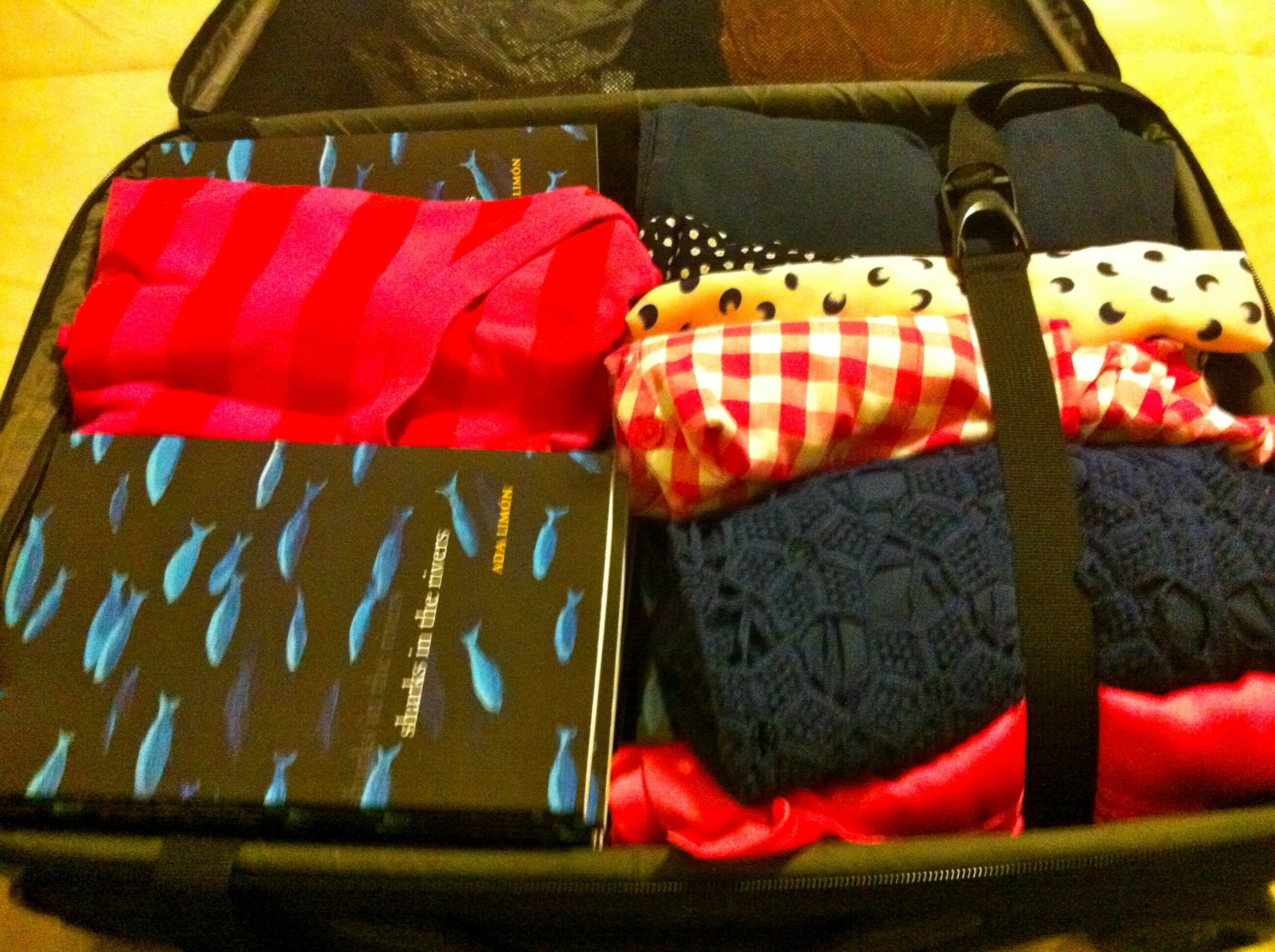
Packed and ready to go!

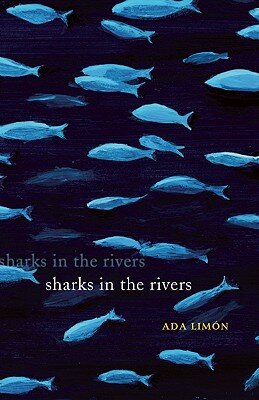
Suitcase packed with SHARKS IN THE RIVERS.

Read more…

Sherry O’Keefe presents us with 4 vignettes which teach us how to launder our own imagery. This post reminds us constantly to look around ourselves, even the smallest of happenings are ones which can be spun into a poem or a story. Everything has a story. Everybody is their own storyteller.


Sugar On a Rope:

He told me potatoes were complicated. I know this is true because I wrote it on a scrap of paper and saved it in my back pocket. Some conversations later, I retrieved the scrap of paper from the lint trap in my dryer. Apparently I had laundered the words when I washed my jeans. The scrap of paper looked a bit like a former leaf, except I could see these words in faded ink: potatoes are complicated and some poems are born in badness. The trouble is I cannot remember the conversation that produced these quotes. I don’t remember anymore where these words came from.

I don’t always know what to keep and what to let go. I’m not the sort to let anything go. There are scraps of paper all over my house. For example, these are the words next to my kitchen sink: We don’t even need to talk about houses on the hill. As writers we deal with the hanging on and the not knowing when to let go.

When he talks to me, he uses panoramic strokes, coaxing me to see the big picture. And for a bit of time, I am right there with him, seeing the big picture. And in fact, I am enjoying the wide view his words offer . . . but then something happens as we keep talking. It is as though we go around a bend, chattering and laughing.

But the poetry-gene activates and the next thing I know I am on my knees, examining something minute, something telescopic.

Later, I will find more random words on scraps of paper:

sugar on a rope, failed harbor

What does it mean to want to be heard?

Little men lined up like starfish on the edge of a tidal pool

Did anything happen in 1882?

Some of these words will find homes in my poems. Some of these words will end as lint in my dryer. And (I am sorry to admit) I am not likely to remember the walk along the river, the wide blue sky, the way back to my car. I won’t remember taking these photos.

*

wheat2

When Someone Picks You Wheat:  

Comes a time we have known before, when we feel a bit out of sorts. Maybe the rain gutters on your house are threatening to rip off your eaves? Probably you are reluctant to climb the ladder and address the problem? Maybe you are feeling like Cali’s new black tire (what happened to the pink one?!) lost between the storm and the front door and no one has noticed you are missing? It may be I am not speaking about gutters and eaves, doors and tires. In an antique aqua blue vase next to my bed is a bouquet of wheat stalks. A few years ago someone read a short story I had written about wheat fields. And then a few went for a drive along the Hi-Line, thinking to take a photo of the crop and send me the photo. Others thought to stop and pick some stalks. Someone parted with a favorite vase. When I realize I am feeling invisible, or under-powered and not willing to climb ladders to save my eaves, the wheat stalks cheer me on. And when I say wheat stalks, I mean to say wheat pickers.


Trailing
First published by Free Fall Magazine in Calgary, Alberta.

He told me once that wheat was patient. If I needed
help with waiting, I should come to this farm field. Between

these stalks of sway and pause, and the horizoned Little Belts,
white pelicans flash and fish the river breaks. I trail the red rock

bank on Jeep, a buckskin mare. We climb dried-up gulches, thread
through bursts of orange paintbrush and bitterroot blooms

of baby-girl-pink. The sky is lonely when it is solid blue- this is why
it follows you. He called it the tag-along shadow. Two strips

of jerky, half of a water canteen. Three ravines to the backside
of Crow Pond. Jeep chomps along the edges of the field, I slip

the red blanket from her sweaty back. The west wind hushes shhhh,
think softly. Gray green yucca, white cottoned milk pods tickle

my bare legs. The more earth touches you when you are young,
the stronger you stand when you are ancient. I circle the rings of teepee

rock, spread the blanket down. Many palms have smoothed
this woven fabric. Jeep swishes her tail once. She’s not my horse-

this is not my dream. He told me once he knew where ghosts come
from. I take in his breath when he exhales. He’s been here forever.

*

signs

 Trespass 

One year my Christmas tree stayed in its stand until March before I hauled it outside to the curb. Twisted girl that I am, there are fluctuating moments in my life when I recall that year fondly. Maybe what I mean is painfully. That year I thought life had trespassed me. My brother talked me through those times. Told me when we learn everything we need, fits inside one Wal-Mart bag, then we’ve learned a liberating lesson. And now, some years later, we re-talked this in the cab of his 1960 Dodge.  Brother, daughter, dog and me. This is the brother who is good at restoring things. Once this pickup gets back to what it was originally meant to be, he will start on something else.

We were on our way to walking his latest dog along the river. This one had been rescued hours shy of being put down at the shelter. Eight months of constant care, she was a new and different dog. How far could I walk, he asked.  Five miles? Eight? He had things to show us. He stood along the river bank, pointing downstream. From here to there and back?

Yes. Sometimes the best path means losing sight of the river for awhile, a bit of trespass might be involved, he said.

Slow talk, long walk –we watched his dog chase gophers. This is the brother with some of the best story-telling ways. It’s all about pacing with a few teasing touches, he explained to my daughter. The longer we walked, the more she grinned – she knew where we were going. No matter which part of my family we spend time with when we visit Back Home, she’s discovered we end up way, way downstream looking down and across the water to where we (not she) grew up.

signsstartWe aren’t allowed access to the other side anymore. The power camp is gone, but if you squint just right you can see the water fountain and the apple orchard and the birch tree we used as second base. The first canyon where we ice-skated on the ponds, and the second hill where we flew kites. People from town drive out to this point, sit in their cars and take in the sight. Unless they get out of their cars and step across the barrier fencing they miss what the river is about. One hundred yards beyond the no-trespass sign is when you start to feel the power of water falling.


*


Don’t look directly at the shadow:

A day after Robb arrived for her annual visit, they piled into Dad’s pickup – Mom in the middle with my dad driving and Robb to my mother’s right. In the back, no doubt, was Roadey, my mother’s one-hundred-pound dog and a cooler with water and juices, carrot and celery sticks. Maybe even some of my mother’s cupcakes. Road trips without Mom’s food in a cooler haven’t happened yet.

Robb has made the annual Trip Back To Montana for at last fifty years. She is my mother’s best friend. By now, this threesome must have driven every back road and seen all there is to see Out Here. For those of you who have been reading this blog for a few months, you may have noticed how many times my dad’s landscape photos have shown up in here. He never tires of our vast landscape nor of  taking photos of the same plateaus, buttes, rock formations and faint wagon trails he visits on these drives.

shadowsThis trip, however, Robb asked my dad to stop in the middle of the gravel road. Take a picture of the praying hands she suggested in her back-easternly way. At first Dad couldn’t see what she was referring to-on account of the shadows along the ridge. Then he realized because of the shadows, the praying hands were possible to be seen.

At 12:51 A. M. this morning my BlackBerry buzzed on my nightstand. I rolled over in bed, knowing I had a new message from my dad (he doesn’t sleep at night). He had sent me the above photo and a quick note about what he’d learned. When we let shadows do what they do best, we see what they suggest.

What I like best about good poetry are the shadows between the words. Often the poem that vibrates inside me is the one which only suggests what might be revealed. I live for the gradual realization we experience when we let shadows work their tricks on us.


profile 2

Sherry O’Keefe, a descendant of Montana pioneers, grew up in a power camp on the Missouri River. Residing now near the Yellowstone River, she is a poetry editor for IthacaLit and an assistant editor for Fifth Wednesday Journal. Her work can be found in Camas: The Nature of the West, Terrain.org, Art & Document  and many other journals. Her most recent collection of poetry, Cracking Geodes Open, was released by Aldrich Press in 2012. Visit her: http://toomuchaugust.wordpress.com.

StarMarriage


Last year I had the words ‘you that sang to me once sing to me now’ tattooed on my right inside forearm. This was not a mid-life crisis act but was overwhelmingly to do with poetry.
The quotation is the first line of a poem by W. S. Merwin ‘Song of the Nomad Flute’ is a poem which appears in The Shadowsof Sirius,[i] a collection which was published in Merwin’s 80th year. I’ve read and re-read this collection, finding new lines and images that sing to me on each reading. When I embarked on my year of learning poetry by heart, ‘Song of the Nomad Flute’ was the first unrhymed poem I learnt. I followed it with another from the same collection – ‘Good Night’, which has some intricate repetition in it and appears to be a farewell to a beloved dog (although I wouldn’t mind having it read at my funeral!).

But my admiration of the individual poems in this book did not impel to me have that line forever inked into my skin. It was the more the collection as a whole and the age at which Merwin published it. Over the last few years, this collection, more than any other, has come to exemplify for me the kind of unapologetic poetry a poet should write and keep writing.

I think there are times in every writing career when a writer reaches a pause. It isn’t exactly writer’s block. Nor is it entirely a period of evaluation. Perhaps you’ve balanced a day job and family life with the private job of writing for a number of years. Perhaps you’ve given writing precedence in your life and you look around you to find that your friends have other lives, plan holidays and do more than window shop. You wonder why you’re writing when you could do so many different things.

When I paused, it was more like fatigue  –   but fatigue with the anxiety that surrounds writing. I was tired of trying to make time  every day to write. I was tired of wondering whether what I was writing was good enough. I wondered whether or not I was pushing my own boundaries. I knew I wasn’t submitting work regularly. I’d let elements of my writing life slip while I attempted to finish other writing projects that clamoured for my attention. At the end, I was simply exhausted by my own mouse-on-a-wheel anxieties.

It didn’t help that my part-time day job was online-teaching, an isolating occupation. Nor did the state of the publishing and related industries help. It was difficult to maintain faith in my profession when I heard almost weekly of independent bookshops closing down, publishers retrenching editors and abandoning imprints and genres. Who would be left publishing poetry when the dust had settled?

the Shadow of SiriusThen I re-opened Merwin’s collection and read his limpid, spare yet mysterious and intimate poems. I was struck by their fearlessness. Some of the lyric poems in The Shadow of Sirius talk in the ‘unadorned voice of a close companion who speaks softly and urgently, as it were, into one’s very ear.’ [ii] It seemed to me that Merwin, as an older poet, was relaxing into his craft. I was very aware that his apparent simplicity – is the result of a lifetime’s rigorous editing and rewriting. I couldn’t speculate how – or indeed whether – Merwin has arrived at a place where all experiences can be accepted, but I could work on my own fear. The first step for me was being reminded that poetry keeps singing to you if you remain open. In my case it was already inked into my skin. I’m not suggesting you do that! But I have compiled a small do-it-yourself list for anyone who also feels that they are paused in their writing career.


  1. Don’t panic. You might simply need a holiday. Everyone else takes a holiday, so why can’t a writer? Declare a holiday for your writing self. Make sure that you note the start and end of your writing holiday on a calendar or in a diary. (You may, of course, write during this period, but don’t feel guilty if you don’t.)
  2. Make some simple goals – decide, for example, to write one poem a month, or submit five poems to competitions. Write these down and tick them off when you complete them.
  3. Attend poetry readings – hearing other people read their work, reading your own work  and just hanging out with other poets can be enriching and make you remember you are part of a poetic continuum.
  4. Set yourself some writing tasks – call these ‘Doing the Scales’ or any other name that implies practice writing. Schedule these into your day or your week.
  5. Finally, write something quite different. Write a picture book. Write a script. Embark on an interlinked narrative about smart young things living in five different space stations, bookended with sharp haiku that all have to have the word star in them.


May that which sang to you once, sing to you now.


[i] Merwin, W. S., The Shadow of Sirius, Copper Canyon Press, 2008.

[ii] http://thecresset.org/2012/Trinity/Weinert_T2012.html 


IMG_7054


Catherine Bateson is an Australian poet and writer for children and young adults. Her last poetry collection , Marriage for Beginners, was published by John Leonard Press. She partially overcame her writing anxieties by joining the Tuesday Poem Blog group and posting a poem on her own blog each Tuesday. In June this year she heads to Paris for three months, courtesy of an Australia Council Grant.
 

51R8NVYPFZL._SL500_AA300_

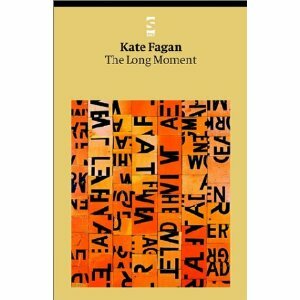
Kate Fagan – The Long Moment
Salt Publishing
$19.95

Kate Fagan is an exceptional Australian poet and musician whose collection, The Long Moment, was published in 2002. Her latest offering is First Light (Giramondo Press) published last year. Her work has appeared in Meanjin, Salt and Calyx: 30 Contemporary Australian Poets. Fagan’s previous works are the chapbooks Thought’s Kilometre (Vagabond Press) and return to a new physics (Tolling Elves). This is a slim and beautiful collection spanning 105 pages, and a work that revisits the former collection.

Think science, music, geology, biology and mathematics. Fagan’s poetic ear is finely tuned and her poems are polished and each is a humble image. Reflect on how these small moments expand outwards and approach complex themes. The first section Calendar starts at April and continues on with 9 prose poems which expands on the idea of organisation on a monthly basis, becoming somewhat of a diary. My favourite lines are from (august) with ‘Emptying over a balcony, slow light recalls the loss of a city.’ There’s something that’s both simplistic about the nature, but also knowing in its grief. Grief, too, is a slow process of gathering oneself. Read more…

1-8e10fa5ef2

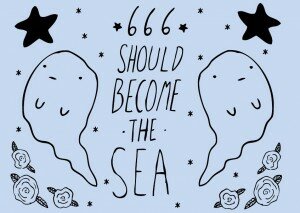
Illustration Cover by Hannah FantanAt first glance this collection reminds me of the way MTC CRONIN accounts for each image, the way one might do so with a list, or taking stock of an item. It’s kind of what I love about CRONIN and what impresses me about Christmass’ poetry. The poetry even utilises space beautifully, echoing precisely the metronome pattern of the sea. At the same time this space is precarious within its typography.

At the beginning of this self-published collection released from Scribd. The site is essentially a huge shared library where you can upload original and innovative works, accessible online or on your smart phone. There’s a keen consistency of rhythm and this undercurrent carries each line as an individual, which is very much what the players of this collection rely on. The narrative can be interpreted on different levels or perhaps an intended gathering of all aspects. The title and the way the poem expresses itself makes me think perhaps a homage to Kerouac’s, The Sea Is My Brother.

Some images that caught my eye which I loved were:

a tempest of albatross
and death
a globe beneath
surface of brine

The thing I soon realised is that 666 SHOULD BE THE SEA doesn’t let you up for air, it keeps you under like a careful and practised anesthetist  It doesn’t even give it’s subjects—the crab or the swordfish—pause or mercy. The ocean swallows everything.

666, the enigma of numerical evil represents unknowns. The sea overtakes the highway and Christmass does well in this transition of the sea (the natural) to apocalyptic (the unknown). There’s no sense of panic in this shift, the directions are soft and kind ‘Let the sea in’ almost like a chant. As readers and witnesses we become the sea and the poem proclaims ‘Become the sea, and so become idealess’. Drawing imagery from lines and curves, ‘hooks’, ‘nets’ and put up against an altered nature: ‘symmetrical fish’. The poem tells us to try not to drown, when the odds are against us.

The great thing about this collection is that you can read the first column straight down its margin or you can read across the line. This gives us a two for one kind of bonus and is an exceptional feat in terms of how difficult that kind of thing is to pull.

This poem is mad. It gets mad with the way its been such a glutton: ‘the swell, the hairy-tailed current of the towering / ocean drift’. Read more…

Buy it from Amazon!

It’s the launch party for my teen poetry collection Dog at the End of the World in three days, and a terrible thought has struck me:

I’m going to have to mingle.

Now, I’m sure there was a point in my life where I had social skills, (mostly chatting up graduate students at English faculty events,) but I have no idea how to start a conversation with a stranger if I can’t open with “soooo, tell me about your thesis…”

At this party I’m meant to be the centre of attention: creative, witty, intelligent, engaging. I’m meant to have something to say for myself. I am in terrible trouble.

I tried googling “social skills for poets”, hoping that some helpful person had written a website dedicated to this exact topic. I’m sure I can’t be the only poet out there who doesn’t know how to function in reality. But apparently it’s too niche even for the internet. Read more…

Welcome to the second edition of Ask a Twitter Poet.  This week I was thinking about how often water comes up in my writing.  Maybe because I’m from New England, grew up on the coast, and then lived in New York city before moving to Texas where, well, we’re basically landlocked.  I dream a lot about water, too — last night I had version #34695467y of the recurring dream where my bathroom is flooding.  And so often dreams like this get incorporated into my work.

So I thought I’d ask what other folks find as recurring topics in their work.  Not abstractions like love or politics or the meaning of life, but straight up, concrete images: birds, sand, trees, breakfast cereal. Below are some of the answers I got on The Twitterz:

Read more…

Candlewick Press, July 2012.

There are two things that pretty much guarantee my interest in a book I haven’t yet read:

1. Fairy tale retellings.

2. Ron Koertge.

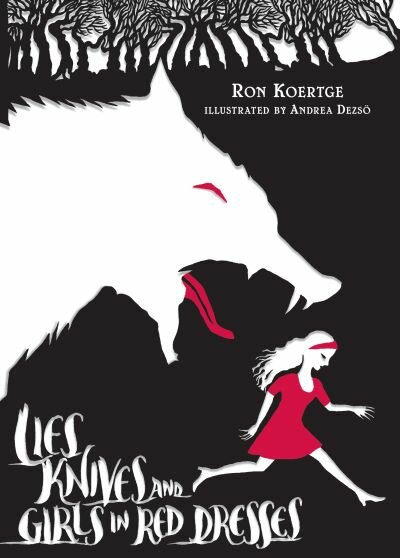
I have yet to read anything by Koertge that I’ve disliked — poetry or prose, adult or young adult.  And his latest, LIES, KNIVES AND GIRLS IN RED DRESSES, is no less than what I’d expect from a fairy tale book by Ron Koertge.

Cleverly blending the classic, gruesome, Grimm-style folklore with a few modern references, each poem in Koertge‘s short collection is a mini retelling of a fairytale.  Spanning from classics like “Little Red Riding Hood” and “Cinderella” to lesser known tales like “The Little Match Girl” and “Diamonds and Toads,” each poem takes on a distinctive, artful voice to carry the short narrative. Read more…

Eloise Healy

Eloise Healy

1) The hardest thing about being an editor at Arktoi Books is saying “no” all the time. Howard Junker, founder of Zyzzyva magazine, told me, “Think about it—you say ‘yes’ once and ‘no’ a thousand times.  Get used to it!”

I never get used to it.  I am an author and have had manuscripts rejected.  Because I am a lesbian author, I also know it is really harder to find a publisher. It is much harder to be published just by virtue of being a woman. There are numbers involved here. See the VIDA website for details about that.

If you are a lesbian writer, I believe there are two other “quotas” at work. I think there’s an assumption in publishing that lesbians don’t have anything to say that the larger society would be interested in. I think some people still have the idea that if you have published one or two lesbians, then you have done enough. There you have it.  It’s the main reason I started Arktoi Books.  There are a ton of wonderful manuscripts by lesbian writers out there that aren’t getting published.

For example, after reading 70 to 100 manuscripts, I end up with 4 or 5 that would make a perfect book for Arktoi. It’s heartening to see there are great manuscripts out there to publish, but it is hard to know I can choose just one.  What wouldn’t I give to be able to publish all the final five?  Or even three? Read more…