To round off the Metre Maid’s celebration of all things PRIDE & all things POETIC, the amazingly talented and charming FURY gives us a delicious eye-feast that is her TOP 5 FAV POETS. So all you have to do is listen, get inspired and remember to always be furious!
Fury is a Melbourne based writer and poet who flits between book covers and sheet covers. She loves love, OkCupid and poetry that punches you in the diaphram. You can check out her work at littlefurycreatures.wordpress.com or soundcloud.com/fury
I’d never heard of Phil Kaye, but I did discover Sarah Kay some weeks before receiving word that she was in Australia touring PROJECT VOICE. Having been taken by the way she translates stories into spoken word and small moments into significance, I instantly booked tickets for myself and a friend. Dumbo Feather (a magazine about productive people) kindly hosted Sarah and Phil, who brought their semi-collaborative show Project Voice to the Malthouse Theatre, Melbourne. The project was founded in 2004 and is an acronym for “Vocal Outreach into Creative Expression” which supports teens, encourages spoken word as a way of self-expression which, they believe is the key in understanding the world and the self. Sarah and Phil employ theatre, storytelling, slam poetry, song and humour in their performances.
I had happened upon Sarah’s work BROTHER and ASTRONAUT but was particularly enamoured by FOREST FIRES. She performed ‘Brother’ but adjusted the story to how old her brother is, current time. I love how she carefully weaves imagery with the same accuracy as you’d hold a conversation. So, it felt like such a blessing to receive that email that one of my best made discoveries was actually going to do a show in my city. My poetry blood-beat hopscotched against skin. Read more…
My new vocation as a performance poet is going stonkingly. Two gigs in, I’ve already achieved three lifelong dreams:
1) Make someone laugh.
2) Get nominated for Poet Laureate.
3) Get over 100 youtube views.
A Good Old Yarn
Parabola Arts Centre, Cheltenham
Hay Brunsdon in her natural condition
Hosted by outrageously drunk and bawdy poetrix Hay Brunsdon, ‘A Good Old Yarn’ makes the obvious link between spoken word and nautical textiles.
I’m pretty nervous. Unfortunately I haven’t had time to think about what to wear or how messed up my hair is, which makes me feel a fraud since in my experience all performance poets don outrageous outfits and hairstyles. I just want to fit in.
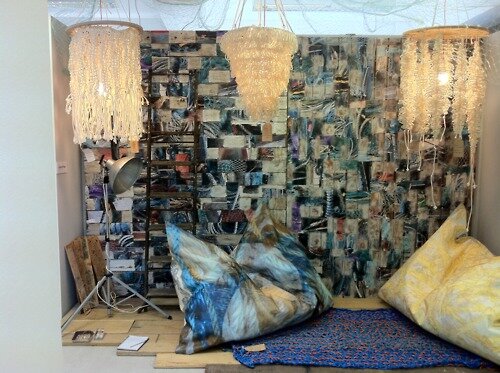
I get to the venue – one of those tiny rooms up lots of stairs, its walls draped in ropes and boat-patterned material – with just enough time to grab something alcoholic. Only I can’t find anyone to serve me alcohol, anywhere, in the whole theatre, and I feel like weeping in a corner as I realise I’m going onstage stone cold sober. Instead I squash myself onto a seafaring beanbag at the side of the stage and quake.
Dan Holloway looking eccentric and bookish
The first poet is Dan Holloway. He’s a big guy with ringlets, trouser-braces and fingerless gloves, and he beats me hands down in the ‘outrageous clothes’ competition going on in my head. Dan pulses out metrical tales of love under Hungerford Bridge and lonely people locked in houses waiting to Let go. What I particularly like about Dan is the way, in the interval, he so quickly corners me and asks me to perform at events he hosts in Oxford. That’s the sort of networking I like – especially from talented poets.
I’m second. The audience is right there, and there’s no mic to hide behind. I do a spiel about emails that I don’t think comes out too rehearsed and launch into:
And it works! I fly through Thing in the Kitchen with only one glitch on ‘gobbling’, my five minutes are up and I retreat to my beanbag.
Lucinda Murray, a co-conspirator in the Writing Circus project reads a funny-sad poem about sorting through her hoarder grandmother’s possessions. Wrongly, she is all self-deprecating and angsty and stuff. She is also beating me clothes-wise, henna-haired and leather-jacketed.
Then it’s the interval.
It’s the interval. There is still no one at the bar and no alcohol to be found anywhere. I linger so long waiting for someone, anyone, to serve me a drink I miss half of the next poet’s act.
This ‘poet’ wears a grey v-neck and a shirt. That is all you need to know.
Joel Denno is Joel Denno.
And last Joel Denno, a guy I first saw flying his way through the Cheltenham Literature Festival Slam with poems about suited businessmen emerging from the mouth of hell for their lunch break. Joel sports a mohawk, blazer and fabulous green eyeshadow; ladies and gents, we have a winner. His first poem is political, pleading, movingly, for the humane euthanasia of farm crops and weeds. He finishes with a love poem to, well…